The original question
What Happened to Nolan Wells. Whats missing to pursue A RICO charge under the federal Racketeer Influenced and Corrupt Organizations Act (RICO?
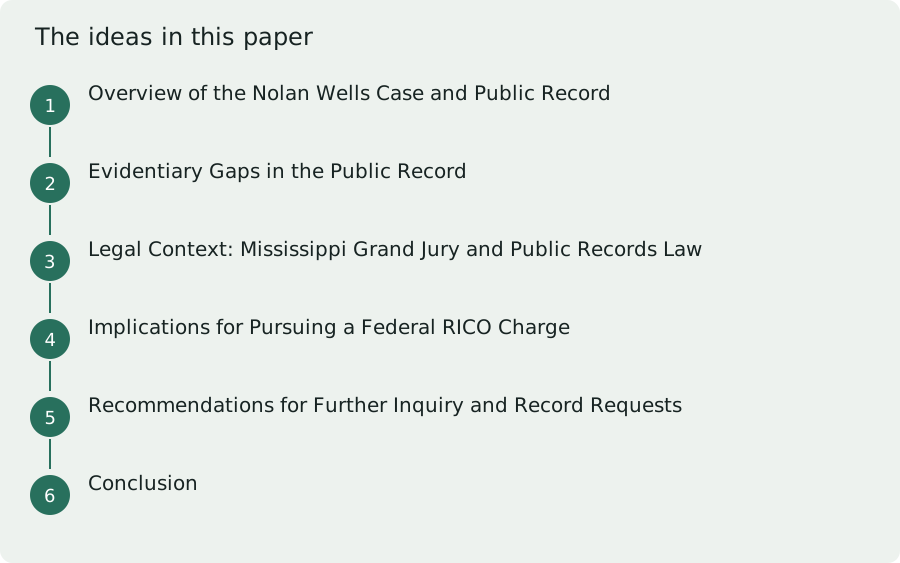
1. Overview of the Nolan Wells Case and Public Record
The death of Nolan Wells has undergone substantial investigative and grand-jury scrutiny, culminating in a publicly filed grand-jury report dated September 18, 2026. This report documents extensive investigative efforts, including 132 subpoenas issued and 43 witnesses heard, with the grand jury having full access to the Jackson County Sheriff's Office (JCSO) and assisting agencies' investigative files. Despite this breadth, the grand jury unanimously returned a No True Bill, indicating no indictment was issued based on the evidence presented. The medical examiner's report and an independent autopsy both concluded the cause and manner of death as undetermined, with specific observations such as the absence of water in airways and an empty stomach noted but not definitive for drowning. The grand jury's findings reflect a comprehensive review but do not replace medical certification or establish causation or culpability. These conclusions are consistent with professional forensic standards acknowledging the diagnostic challenges in water-related deaths, especially with decomposition.
Input report sections: R1
2. Evidentiary Gaps in the Public Record
Critical categories of evidence remain missing or undisclosed in the public record, limiting independent verification and comprehensive understanding of the circumstances surrounding Nolan Wells's death. These include:
- Original scene and recovery documentation, such as authenticated discovery photos, search and rescue (SAR) logs, and environmental drift modeling data.
- Native digital evidence from phones and cloud services, including raw forensic images, carrier records, and message provenance data.
- Complete vessel and Sea Tow records, including native GPS tracks, engine diagnostics, and original dispatch audio.
- Original emergency dispatch and Coast Guard records with synchronized timestamps and metadata.
- Full medical examiner case files, including scaled injury photographs, histology slides, toxicology bench data, and specimen retention logs.
- Native photos and videos with provenance metadata to authenticate timing and content.
- Complete ordinary interview recordings, passenger rosters, and search operation logs.
While these gaps do not imply evidence was never collected or preserved, their absence from the public domain constrains external audit and legal scrutiny. Notably, the independent pathologist criticized the absence of close-up photographs and histological examination of posterior scalp contusions, highlighting a professional quality concern rather than mere non-disclosure.
Input report sections: R1
3. Legal Context: Mississippi Grand Jury and Public Records Law
Mississippi law governs grand-jury secrecy, public records access, and medical examiner procedures relevant to the Nolan Wells case. Key points include:
- Grand-jury proceedings and witness identities are confidential for six months post-adjournment, with no automatic public release of transcripts or subpoena returns.
- A No True Bill is a procedural decision not to indict and does not equate to a medical cause or manner of death ruling.
- The Mississippi Public Records Act broadly defines public records but exempts law enforcement investigative reports from mandatory public disclosure, allowing agencies discretion.
- Medical examiner autopsy reports are accessible to immediate family upon request, but autopsy media (photos, videos) remain confidential unless court access is granted for good cause.
- The law provides a formal petition process for disputing medical examiner determinations, including possible circuit court review.
- Documentation deficiencies, such as missing photographs or histology, may raise professional concerns but do not automatically establish civil liability or criminal conduct absent evidence of intent or breach of duty.
These statutes frame the current public record's limitations and the procedural avenues available for further inquiry or challenge.
Input report sections: R1
4. Implications for Pursuing a Federal RICO Charge
The federal Racketeer Influenced and Corrupt Organizations Act (RICO) targets patterns of racketeering activity conducted through an enterprise engaged in interstate commerce. To pursue a RICO charge, prosecutors must establish:
- The existence of an enterprise involving a group or organization.
- A pattern of racketeering activity, meaning at least two predicate criminal acts within ten years.
- That the defendant participated in the conduct or management of the enterprise's affairs through the pattern of racketeering.
The supplied public record and investigative materials concerning Nolan Wells's death do not disclose evidence of an enterprise or predicate acts such as fraud, extortion, bribery, or other racketeering offenses. The grand jury's No True Bill and the undetermined medical findings further indicate insufficient evidence to support criminal charges, let alone the complex elements required for RICO prosecution. Moreover, the significant evidentiary gaps, especially in digital, forensic, and operational records, preclude establishing the continuity and relatedness of alleged criminal conduct necessary under RICO.
Therefore, what is missing to pursue a RICO charge includes:
- Concrete evidence of an enterprise involved in racketeering activities.
- Documented predicate offenses with corroborated proof.
- Clear linkage of the defendant(s) to the enterprise's criminal conduct.
- Comprehensive, authenticated investigative records supporting these elements.
Without these, a RICO charge cannot be substantiated based on the current public and investigative record.
Input report sections: R1
5. Recommendations for Further Inquiry and Record Requests
To advance understanding or potential legal action, including any consideration of RICO or other charges, the following steps are advisable:
- Submit specific, itemized public records requests to custodians such as JCSO, State Medical Examiner, Coast Guard, Sea Tow, and digital service providers, specifying categories and date ranges.
- Pursue family or authorized representative access to medical examiner autopsy media and reports under Mississippi law.
- Seek legal guidance on grand-jury material disclosure, considering Rule 13.5 secrecy provisions and potential court orders.
- Request detailed forensic data with provenance, including native phone images, GPS logs, and original emergency dispatch recordings.
- Evaluate the independent pathologist's quality concerns through expert review of complete autopsy materials.
These actions respect legal boundaries while addressing the critical evidentiary gaps identified, enabling more informed assessments of the case and any related criminal investigations.
Input report sections: R1
6. Conclusion
The Nolan Wells case has been subject to extensive investigation and grand-jury review, yet the publicly available record remains incomplete for independent verification or comprehensive legal evaluation. The grand jury's No True Bill and the undetermined medical examiner findings reflect the current evidentiary limitations. Significant categories of original evidence remain undisclosed, constraining external audit and potential prosecution efforts.
Regarding the pursuit of a federal RICO charge, the supplied materials do not reveal the requisite elements of an enterprise, predicate racketeering acts, or defendant participation in such conduct. The absence of these foundational components, coupled with evidentiary gaps, precludes advancing a RICO prosecution based on the current record.
Future efforts should focus on targeted record requests, expert reviews, and legal procedures to clarify unresolved questions and assess any criminal liability appropriately.
Input report sections: R1
Figures & models
Reading guide