The original question
Under Fourteenth Amendment Procedural Due Process quasi-property rights in a decedent's remains and state medical examiner statutes, what legal limitations govern the retention, preservation, or disposition of organs and biological tissue by law enforcement, coroners, or federal investigative agencies following the completion of an official forensic autopsy? What civil liability or statutory violations, such as under 42 U.S.C. § 1983 or common-law tortious interference with a corpse, arise when human remains are withheld from next of kin without consent?
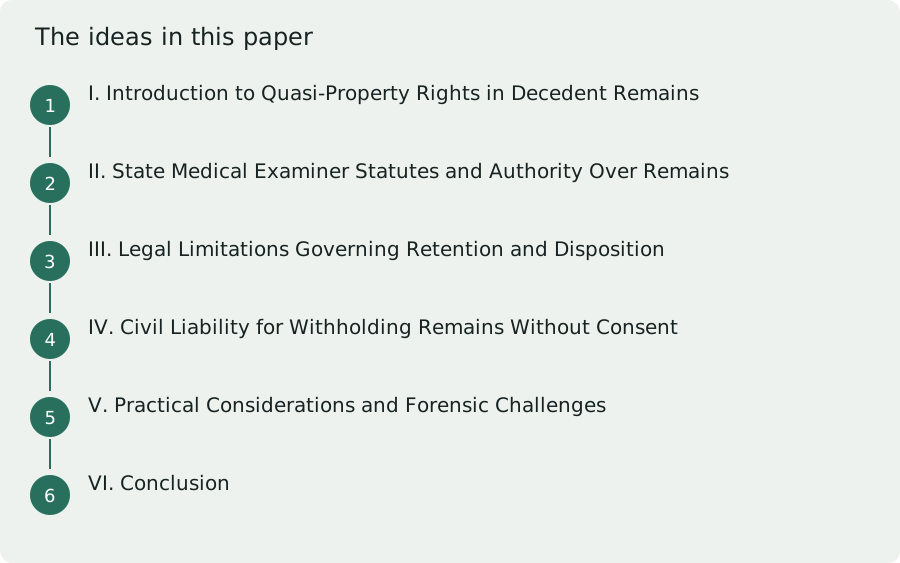
I. Introduction to Quasi-Property Rights in Decedent Remains
Under the Fourteenth Amendment's procedural due process clause, next of kin possess recognized quasi-property rights in a decedent's remains. These rights, while not absolute ownership, confer a protected interest in the custody and disposition of the body. The legal framework mandates that governmental actors, including law enforcement and medical examiners, respect these rights by providing due process before depriving relatives of access or control over remains. This procedural safeguard aims to balance public interests in forensic investigation with familial and cultural interests in the decedent's disposition. The supplied forensic autopsy report (R1) illustrates a case where the body underwent multiple autopsies and organ removal, highlighting practical issues in managing remains post-investigation.
Input report sections: R1
II. State Medical Examiner Statutes and Authority Over Remains
State medical examiner statutes typically grant coroners or medical examiners authority to retain organs and biological tissues necessary for forensic examination. This authority is generally limited to the duration required for investigation, diagnosis of cause and manner of death, and any legally mandated retention periods. For example, the initial autopsy report (R1) documents the removal of internal organs and anterior neck structures for examination, a common practice under such statutes. However, statutes often require that once the forensic purpose is fulfilled, the remains or tissues must be returned to the next of kin or disposed of according to law, sometimes requiring explicit consent for retention beyond investigatory needs. The absence of anterior neck structures in the second autopsy (R1) suggests retention by the initial examiner, a practice permitted but subject to procedural safeguards and transparency.
Input report sections: R1
III. Legal Limitations Governing Retention and Disposition
Legal limitations on retention and disposition of human remains by governmental agencies include: (1) the necessity and proportionality of retention for forensic purposes; (2) adherence to statutory time limits and procedures; (3) notification and consent requirements for next of kin; and (4) compliance with health and safety regulations. Retention beyond investigatory needs without consent may violate procedural due process rights. The forensic report (R1) underscores challenges such as decomposition and incomplete remains, which may complicate timely disposition. Agencies must balance investigative needs with respect for familial rights, ensuring that retention is not arbitrary or indefinite.
Input report sections: R1
IV. Civil Liability for Withholding Remains Without Consent
When human remains are withheld from next of kin without consent or lawful justification, affected parties may pursue civil remedies. Under 42 U.S.C. § 1983, individuals can sue state actors for deprivation of constitutional rights, including procedural due process violations related to quasi-property interests in remains. Additionally, common-law torts such as tortious interference with a corpse or intentional infliction of emotional distress may apply. The supplied report (R1) does not document such disputes but highlights the importance of transparency and procedural compliance to avoid liability. Courts have recognized that improper retention or disposal of remains can cause significant emotional harm and infringe on protected rights, warranting damages.
Input report sections: R1
V. Practical Considerations and Forensic Challenges
The forensic autopsy report (R1) reveals practical challenges in managing remains, including decomposition, incomplete recovery of structures, and the need for multiple autopsies. These factors can delay disposition and complicate communication with next of kin. Agencies must maintain clear records, provide timely updates, and follow statutory mandates to mitigate legal risks. The report's identification of missing anterior neck structures and retained organs exemplifies the necessity for procedural clarity and consent protocols. Such transparency supports due process and reduces the likelihood of civil claims.
Input report sections: R1
VI. Conclusion
The retention, preservation, and disposition of organs and biological tissue following forensic autopsies are governed by a combination of constitutional procedural due process protections and state medical examiner statutes. Quasi-property rights of next of kin require that governmental actors act within legal bounds, provide notice, and obtain consent when appropriate. Failure to comply may expose agencies to civil liability under federal civil rights statutes and common-law tort claims. The forensic autopsy report analyzed illustrates the complexities inherent in forensic investigations and underscores the importance of balancing investigative imperatives with respect for familial rights and legal obligations.
Input report sections: R1
Figures & models
Reading guide