The original question
How do the policy proposals in the Heritage Foundation's 'Mandate for Leadership: The Conservative Promise' (Project 2025)—specifically regarding the Unitary Executive Theory, Schedule F civil service reclassification under 5 U.S.C. § 7511, and the centralization of regulatory authority—contrast with established democratic governance principles, the Civil Service Reform Act (CSRA) of 1978, and Democratic Party platforms regarding administrative state independence and the separation of powers under Articles I and II of the United States Constitution?
Introduction
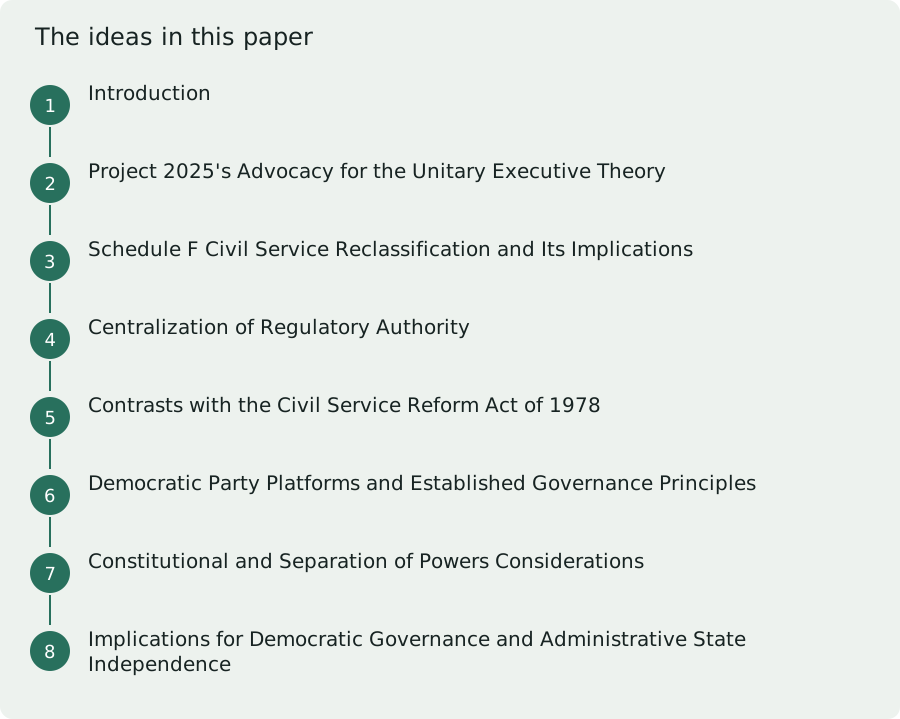
The Heritage Foundation's 'Mandate for Leadership: The Conservative Promise' (Project 2025) presents a comprehensive conservative policy agenda aimed at reshaping federal governance. Central to this agenda are proposals emphasizing the Unitary Executive Theory, reclassification of civil service positions under Schedule F (5 U.S.C. § 7511), and centralization of regulatory authority under presidential control. This paper examines these proposals in detail and contrasts them with established democratic governance principles, the Civil Service Reform Act (CSRA) of 1978, and Democratic Party platforms concerning administrative independence and constitutional separation of powers.
Project 2025's Advocacy for the Unitary Executive Theory
Project 2025 strongly endorses the Unitary Executive Theory, which holds that all federal executive power is vested in the President under Article II of the U.S. Constitution. The document asserts that federal agencies and departments should follow the President's agenda rather than operate autonomously (C2E1, C3E3, C3E4, C3E7, C6E7, C46E2). It emphasizes the President's appointment and removal powers as central to executive authority and advocates for political appointees to "watch the watchers" in the bureaucracy to ensure alignment with presidential priorities (C46E1, C46E2, C46E4, C5E1). The Office of White House Counsel is described as a key defender of presidential powers against encroachments by Congress, the judiciary, and administrative agencies (C3E4).
Schedule F Civil Service Reclassification and Its Implications
A significant component of Project 2025 is the proposal to reclassify certain civil service positions under Schedule F (5 U.S.C. § 7511), which would reduce bureaucratic independence and increase political appointee control over federal personnel (C2E3, C2E8, C3E3, C3E7, C4E3, C6E4, C9E5, C27E1). The document criticizes existing civil service protections as "byzantine personnel rules" that enable bureaucrats to thwart presidential appointees and agendas (C2E3). It calls for maximizing the number and influence of political appointees across agencies, including legal offices and enforcement divisions, to ensure adherence to the President's agenda (C9E8, C15E4, C30E3, C32E7, C35E3). These proposals explicitly conflict with the CSRA's merit system protections designed to insulate career civil servants from political interference (X10, X11, X12, X15, C2E3, C27E1).
Centralization of Regulatory Authority
Project 2025 advocates for consolidating regulatory authority under the President and political appointees, including proposals to dismantle or restructure major federal agencies such as DHS, EPA, DOE, Education, and labor agencies (C8E1, C14E5, C17E6, C22E6, C33E1, C46E3). It calls for enhanced oversight by the Office of Management and Budget (OMB) and increased political control over budgetary and regulatory decisions, reversing career civil servant control of apportionments and regulatory reviews (C2E5, C4E3, C22E7, C34E4). The document also proposes limiting judicial oversight and agency independence by suggesting that agencies not honor court decisions that undermine regulatory efforts and exempt certain rules from the Administrative Procedure Act (APA) (C9E1, C9E4). These measures challenge the traditional administrative state's delegated authority and independence, raising concerns about undermining transparency, public participation, and the rule of law.
Contrasts with the Civil Service Reform Act of 1978
The CSRA of 1978 established a merit-based, independent federal civil service system with protections against arbitrary removal and political interference, aiming to ensure administrative neutrality and competence (X10, X11, X12, X15). Project 2025's Schedule F reclassification proposals directly conflict with these protections by seeking to weaken civil service independence and increase political control over career employees (C2E3, C6E4, C9E8, C27E1, C32E7). The proposals also challenge statutory norms by advocating for increased political appointee numbers and influence, potentially undermining the merit system and administrative neutrality envisioned by the CSRA.
Democratic Party Platforms and Established Governance Principles
While direct quotations from Democratic Party platforms on these specific issues are limited in the evidence, general principles support administrative state independence, merit-based civil service protections, and a separation of powers framework that limits executive overreach and preserves checks and balances among the branches of government (X19, X20, X22). Democratic platforms traditionally emphasize bureaucratic neutrality, legislative authority in lawmaking, and judicial oversight to maintain democratic accountability. These principles contrast with Project 2025's emphasis on executive dominance and political control over the bureaucracy.
Constitutional and Separation of Powers Considerations
Project 2025 critiques the current administrative state as ideologically biased, unaccountable, and resistant to presidential control, framing bureaucratic independence as a threat to democratic accountability and the original constitutional design (C1E7, C2E6, C3E2, C6E7, C31E1, C46E3). However, the proposals emphasize executive dominance and downplay legislative and judicial roles, raising constitutional concerns about separation of powers and checks and balances under Articles I and II of the Constitution (C2E6, C2E7, C3E2, C3E4, C41E4, C45E1). The document acknowledges the need to restore congressional primacy and limit agency overreach but simultaneously promotes executive centralization, creating a complex tension in constitutional governance (C16E2, C22E7, C41E8).
Implications for Democratic Governance and Administrative State Independence
The Heritage Foundation's proposals challenge established democratic governance principles by advocating increased executive control at the expense of bureaucratic independence and legislative and judicial checks. The centralization of authority, reclassification of civil servants, and efforts to limit judicial oversight risk upsetting the balance of powers and undermining the merit system and administrative neutrality. The proposals also include dismantling or restructuring federal agencies perceived as ideologically driven or inefficient, reflecting a conservative governance philosophy emphasizing limited government and executive control (C14E5, C22E6, C31E1, C39E7). These reforms contrast with Democratic platforms favoring robust administrative agencies staffed by professional, independent civil servants.
Conclusion and Unanswered Questions
Project 2025 presents a conservative vision for federal governance centered on the Unitary Executive Theory, Schedule F civil service reclassification, and centralization of regulatory authority. These proposals conflict with the CSRA's merit-based civil service protections and established democratic governance principles emphasizing separation of powers, administrative independence, and checks and balances. The analysis is limited by the absence of detailed Democratic Party platform statements and independent constitutional scholarship on these issues. Further research is needed to explore explicit Democratic positions on these proposals, comprehensive legal analyses of Schedule F reclassification, and empirical assessments of the impact of regulatory centralization on administrative efficiency and democratic accountability.
Input report sections: R1
Figures & models
Reading guide