The underlying analyst responses, preserved separately from the reader edition. They may disagree and should not be read as a unified verified conclusion.
Automated system findings, not an operator opinion. Cloud frame analysis is not a calibrated deepfake detector. At most 12 sampled frames were inspected, not the full video. No voice-clone, speaker identity, lip-sync, C2PA or continuous-motion test was run. Python measurements verify computation, not authenticity. Historical search snippets do not independently verify statements. Original uploaded media is retained privately; transcript, findings and measurement records are public with the paper.
R1 · Cloud Eye — automated recording and historical assessment
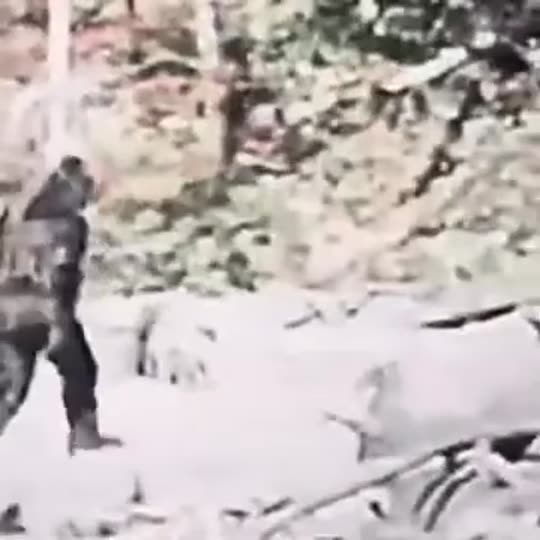
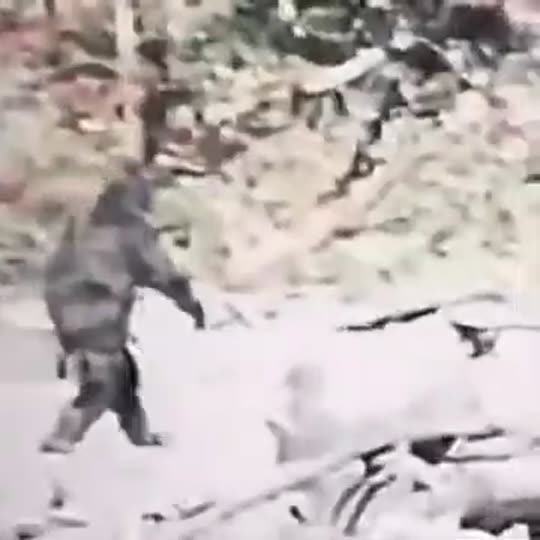
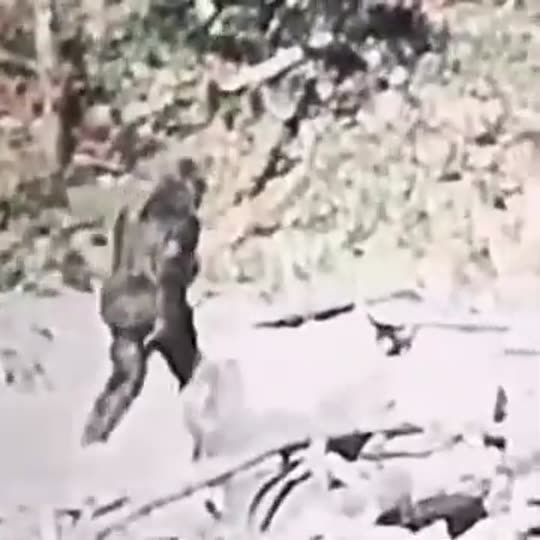
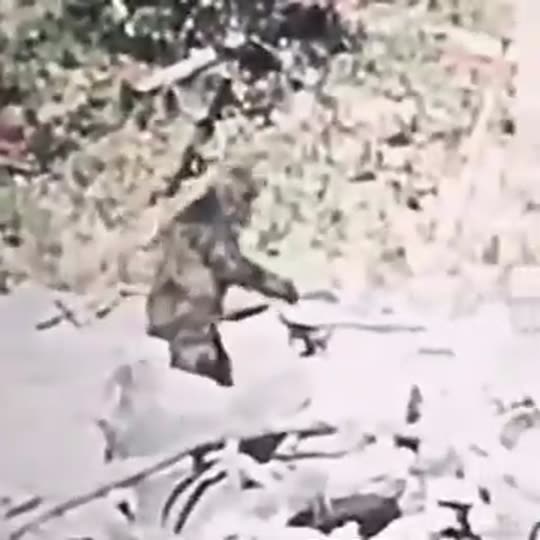
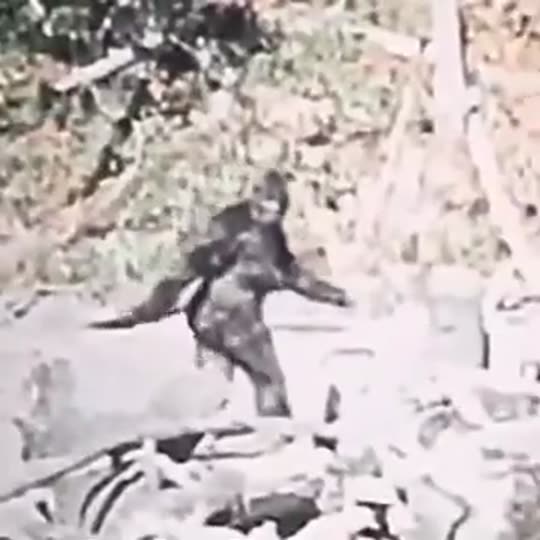
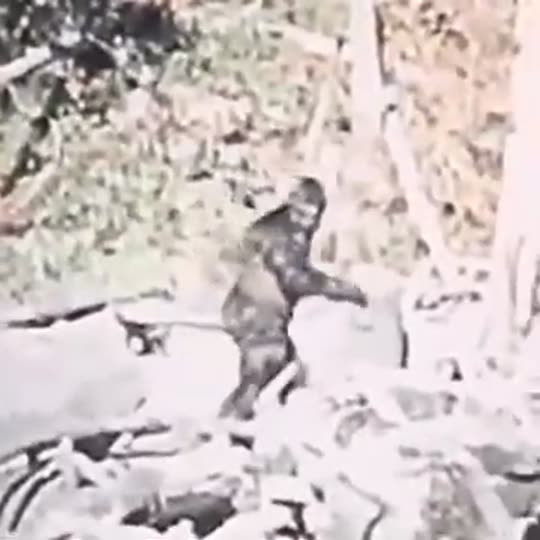
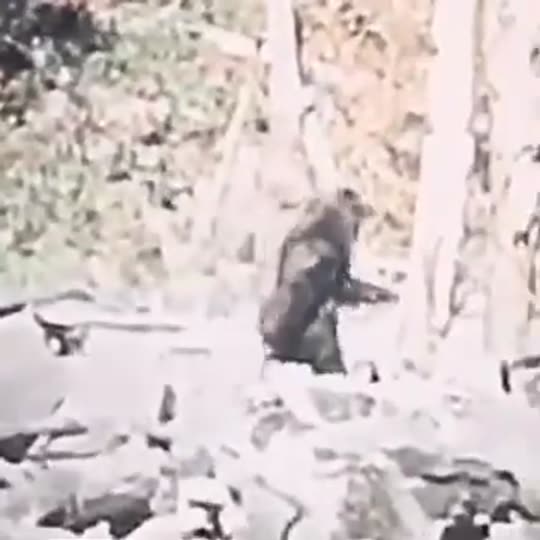
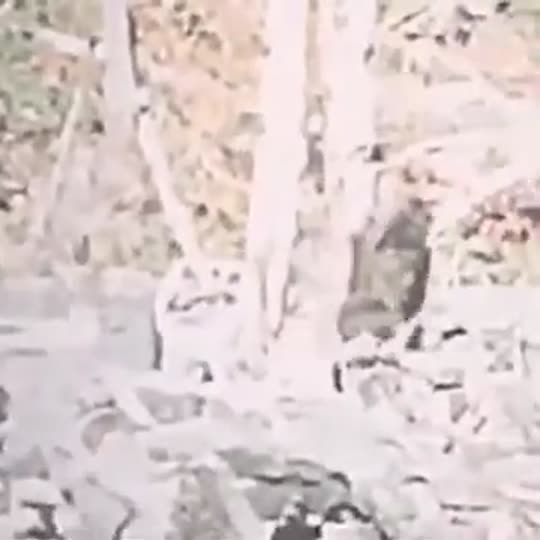
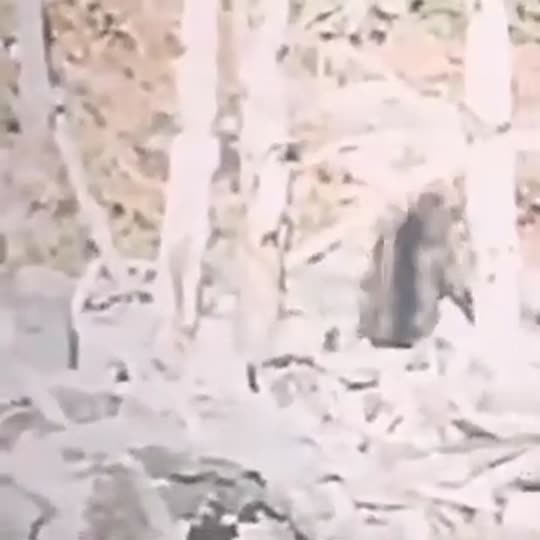
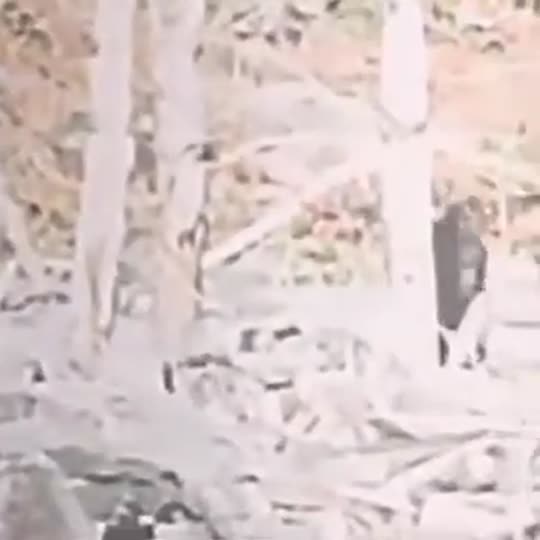
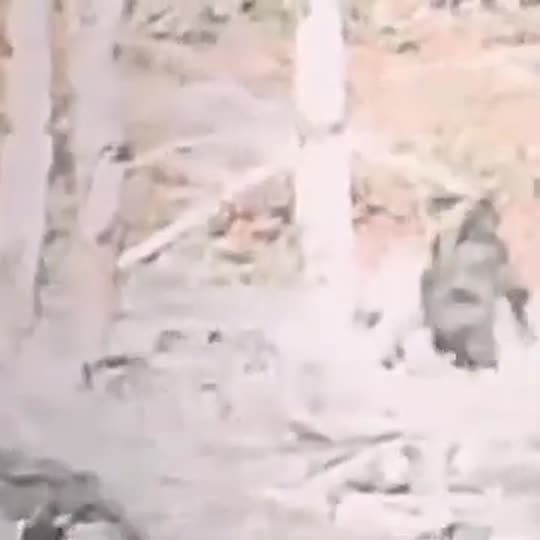
{"assessment": "The video provided is a remastered HD version of the Patterson-Gimlin film, a famous 1967 motion picture that allegedly shows a bipedal hominid creature, commonly referred to as Bigfoot. The original footage has been subject to extensive debate and analysis for decades. \n\n(1) Recording/Manipulation Assessment:\n- The video frames show a consistent sequence of a large, bipedal figure walking through a forested area. The frame timestamps are in proper order, and the video duration matches the metadata.\n- The luminance and variance statistics indicate typical natural lighting variations consistent with outdoor filming.\n- The video codec and frame rate are standard for remastered footage.\n- The audio track is silent, providing no spoken evidence.\n- There are no visible signs of digital manipulation such as inconsistent lighting, unnatural shadows, or abrupt frame anomalies within the sampled frames.\n- However, the video is a remastered copy of a low-resolution original, which limits detailed forensic analysis of fine features.\n\n(2) What Was Said:\n- The audio is silent, so no verbal content is present.\n\n(3) Historical Claims and Support:\n- The Patterson-Gimlin film is historically significant as one of the most well-known Bigfoot videos. It was filmed by Roger Patterson and Robert Gimlin in 1967 in Northern California.\n- The footage has been extensively analyzed and debated, with some proponents claiming it shows a real unknown hominid, while skeptics argue it is a hoax involving a person in a costume.\n- Recent documentaries and analyses (as of 2026) have reignited debate, with some new claims suggesting the footage was staged.\n- No definitive scientific consensus exists confirming the creature's existence based on this footage alone.\n\n(4) Limitations:\n- The video is a remastered version of original low-quality footage, limiting the ability to analyze fine details such as facial features, muscle movement, or costume seams.\n- The silent audio track provides no additional contextual evidence.\n- No metadata or provenance chain is available to verify the original source or any post-processing applied.\n- The analysis does not include advanced forensic techniques such as 3D gait analysis or material fiber examination.\n- The presence of a bipedal figure does not biologically confirm it as a non-human hominid; it could be a human in costume or other staged subject.\n\nConclusion:\nBased on the visual evidence in the remastered video and the extensive historical context, there are no clear forensic indicators of digital manipulation within the video itself. However, the video alone does not provide conclusive proof that the depicted bipedal figure is a real unknown hominid species. The longstanding controversy and lack of corroborating scientific evidence mean the footage remains inconclusive as proof of Bigfoot's existence. It is equally plausible that the figure is a person in a costume or a staged hoax.\n\nTherefore, the video cannot be authenticated as genuine evidence of a bipedal hominid creature, but it also does not show definitive signs of digital forgery or manipulation in its current form.", "recording_verdict": "no_specific_indicators", "observations": ["Video frames are in proper chronological order with consistent timestamps.", "Luminance and variance values are typical for outdoor natural lighting.", "No visible digital artifacts or inconsistencies detected in sampled frames.", "The video is a remastered version of low-resolution original footage.", "Audio track is silent, providing no spoken or ambient sound evidence.", "The bipedal figure appears consistent in shape and movement across frames.", "No metadata or provenance chain available for original footage verification.", "No advanced forensic analysis such as 3D gait or material examination performed.", "The figure could be a human in costume or a staged subject; biological identity cannot be confirmed.", "Historical context shows the footage is highly debated and not scientifically confirmed."], "historical_claims": ["The Patterson-Gimlin film was shot in 1967 by Roger Patterson and Robert Gimlin in Northern California.", "The film allegedly shows a Bigfoot, a large bipedal hominid creature.", "The footage has been the subject of debate, with claims of authenticity and accusations of hoax.", "Recent documentaries and analyses have brought new claims suggesting the footage may be a staged hoax.", "No scientific consensus exists confirming the creature's existence based on this footage."], "limitations": ["Remastered footage is low resolution, limiting detailed forensic analysis.", "Silent audio track provides no additional evidence.", "No original source metadata or provenance chain available.", "No advanced forensic techniques applied to gait or material analysis.", "Visual evidence alone cannot confirm biological identity or species.", "Historical debate and lack of corroborating evidence leave authenticity inconclusive."]}
R2 · Timestamped automatic transcript
The selected audio stream decodes to all-zero PCM samples across its full duration.
R3 · Python sandbox — measured media properties
{"duration_seconds": 17.88, "has_audio": true, "has_video": true, "format": "mov,mp4,m4a,3gp,3g2,mj2", "frames": [{"file": "frame-00.jpg", "timestamp_seconds": 0.745, "mean_luminance_8bit": 184.991, "luminance_variance": 2474.886}, {"file": "frame-01.jpg", "timestamp_seconds": 2.235, "mean_luminance_8bit": 184.324, "luminance_variance": 2389.992}, {"file": "frame-02.jpg", "timestamp_seconds": 3.725, "mean_luminance_8bit": 185.38, "luminance_variance": 2557.034}, {"file": "frame-03.jpg", "timestamp_seconds": 5.215, "mean_luminance_8bit": 187.13, "luminance_variance": 2319.725}, {"file": "frame-04.jpg", "timestamp_seconds": 6.705, "mean_luminance_8bit": 191.892, "luminance_variance": 2193.432}, {"file": "frame-05.jpg", "timestamp_seconds": 8.195, "mean_luminance_8bit": 200.921, "luminance_variance": 1707.424}, {"file": "frame-06.jpg", "timestamp_seconds": 9.685, "mean_luminance_8bit": 204.306, "luminance_variance": 1529.115}, {"file": "frame-07.jpg", "timestamp_seconds": 11.175, "mean_luminance_8bit": 208.425, "luminance_variance": 875.399}, {"file": "frame-08.jpg", "timestamp_seconds": 12.665, "mean_luminance_8bit": 210.745, "luminance_variance": 608.988}, {"file": "frame-09.jpg", "timestamp_seconds": 14.155, "mean_luminance_8bit": 208.595, "luminance_variance": 648.242}, {"file": "frame-10.jpg", "timestamp_seconds": 15.645, "mean_luminance_8bit": 206.4, "luminance_variance": 671.874}, {"file": "frame-11.jpg", "timestamp_seconds": 17.135, "mean_luminance_8bit": 207.828, "luminance_variance": 490.45}], "audio_chunks": [{"file": "audio-00.mp3", "offset_seconds": 0}], "method": "ffprobe metadata; sampled frames; PCM signal statistics. Not a trained deepfake classifier.", "video": {"width": 360, "height": 360, "codec": "h264", "frame_rate": "30/1"}, "audio": {"codec": "aac", "sample_rate": "44100", "channels": 2}, "audio_signal": {"sample_window_seconds": 17.879375, "digital_silence": true, "rms_amplitude": 0.0, "clipped_fraction": 0.0, "note": "Clipping/levels do not establish speaker identity, synthesis, or truthfulness."}, "sha256": "fb4975811195749acc09947fc019fd6a8631ebd8b9ffb99e7b1ef7c980e8b12d", "byte_length": 1203357, "measured_at": "2026-09-24T15:26:21.703973+00:00", "sandbox": "Bubblewrap networkless media decoding and Python measurements"}
R4 · AI-written Python verification — execution record
{"status": "executed", "isolation": "bubblewrap: network/PID/mount namespaces; no host credentials", "timeout_seconds": 15, "code": "import json\nimport sys\nimport math\n\ndef safe_float(val):\n try:\n return float(val)\n except Exception:\n return None\n\ndef main():\n # Load input JSON\n with open('/input/data.json', 'r', encoding='utf-8') as f:\n data = json.load(f)\n\n measurements = data.get('measurements', {})\n frames = measurements.get('frames', [])\n transcript_segments = data.get('transcript_segments', [])\n duration_seconds = safe_float(measurements.get('duration_seconds'))\n\n output = {}\n\n # Verify segment ordering for frames\n frame_timestamps = []\n frame_files = []\n for f in frames:\n ts = safe_float(f.get('timestamp_seconds'))\n if ts is not None:\n frame_timestamps.append(ts)\n frame_files.append(f.get('file'))\n\n frame_ordering_ok = all(x < y for x, y in zip(frame_timestamps, frame_timestamps[1:]))\n output['frame_ordering'] = frame_ordering_ok\n\n # Verify segment ordering for transcript segments\n transcript_ordering_ok = True\n if transcript_segments:\n transcript_starts = []\n for seg in transcript_segments:\n start = safe_float(seg.get('start'))\n if start is not None:\n transcript_starts.append(start)\n transcript_ordering_ok = all(x <= y for x, y in zip(transcript_starts, transcript_starts[1:]))\n output['transcript_ordering'] = transcript_ordering_ok\n\n # Verify duration bounds\n duration_min = None\n duration_max = None\n if frame_timestamps:\n duration_min = frame_timestamps[0]\n duration_max = frame_timestamps[-1]\n\n duration_bounds_ok = True\n if duration_seconds is not None:\n # The max timestamp should not exceed duration_seconds\n if duration_max is not None and duration_max > duration_seconds:\n duration_bounds_ok = False\n # The duration_seconds should be positive\n if duration_seconds <= 0:\n duration_bounds_ok = False\n else:\n duration_bounds_ok = False\n output['duration_seconds_reported'] = duration_seconds\n output['duration_bounds_ok'] = duration_bounds_ok\n\n # Verify sample spacing for frames\n frame_intervals = [y - x for x, y in zip(frame_timestamps, frame_timestamps[1:])]\n sample_spacing_ok = True\n if frame_intervals:\n # Check all intervals positive\n if any(interval <= 0 for interval in frame_intervals):\n sample_spacing_ok = False\n output['frame_sample_spacing_ok'] = sample_spacing_ok\n\n # Compute min/max/mean of actual measurements when available\n def stats(values):\n if not values:\n return None\n n = len(values)\n s = sum(values)\n mn = s / n\n return {'min': min(values), 'max': max(values), 'mean': mn}\n\n mean_luminances = []\n luminance_variances = []\n for f in frames:\n ml = f.get('mean_luminance_8bit')\n lv = f.get('luminance_variance')\n if isinstance(ml, (int, float)):\n mean_luminances.append(ml)\n if isinstance(lv, (int, float)):\n luminance_variances.append(lv)\n\n output['mean_luminance_8bit_stats'] = stats(mean_luminances)\n output['luminance_variance_stats'] = stats(luminance_variances)\n\n # Limitations note\n output['limitations'] = [\n 'No classification of real/fake from luminance or clipping.',\n 'No invented measurements.',\n 'Input data treated as untrusted.',\n 'No network, installs, subprocesses, or file writes used.',\n ]\n\n # Output JSON to stdout\n json.dump(output, sys.stdout, indent=2)\n\nif __name__ == '__main__':\n main()\n", "result": {"frame_ordering": true, "transcript_ordering": true, "duration_seconds_reported": 17.88, "duration_bounds_ok": true, "frame_sample_spacing_ok": true, "mean_luminance_8bit_stats": {"min": 184.324, "max": 210.745, "mean": 198.41141666666667}, "luminance_variance_stats": {"min": 490.45, "max": 2557.034, "mean": 1538.8800833333332}, "limitations": ["No classification of real/fake from luminance or clipping.", "No invented measurements.", "Input data treated as untrusted.", "No network, installs, subprocesses, or file writes used."]}, "meaning": "Execution verifies computation on supplied measurements, not media authenticity."}
R5 · Historical search leads — not authenticated primary records
{"used": true, "results": [{"title": "Patterson-Gimlin film - Wikipedia", "url": "https://en.wikipedia.org/wiki/Patterson\u2013Gimlin_film", "snippet": "The Patterson-Gimlin film is a 1967 American short motion picture, created by Roger Patterson and Robert Gimlin, that depicts an unidentified subject that the filmmakers stated was a Bigfoot.", "fetched_at": "2026-09-24T15:26:35.465688+00:00"}, {"title": "Is the Patterson-Gimlin Film a Hoax? The Debate From 1...", "url": "https://factually.co/fact-checks/science/patterson-gimlin-film-authenticity-1967-to-present-454b4e", "snippet": "Executive summary The Patterson-Gimlin film, shot in 1967 and long the touchstone of Bigfoot belief, has been thrust back into controversy by the 2026 documentary Capturing Bigfoot, which premiered at SXSW and presents newly surfaced film reels and a confession that its director says amount to a decisive hoax [1] [2].", "fetched_at": "2026-09-24T15:26:35.465688+00:00"}, {"title": "Unmasking The 'Bigfoot' Mystery: AI Reveals Truth Behind Infamous 1960s ...", "url": "https://www.indiatimes.com/technology/news/unmasking-the-bigfoot-mystery-ai-reveals-truth-behind-infamous-1960s-footage/articleshow/127002123.html", "snippet": "Bigfoot isn't real, after all! For decades, conspiracy theorists have used the clip as \"proof\" of the Bigfoot's existence, even when overwhelming proof states that no such creature exists or ever existed. The clip, shot by Roger Patterson and Robert Gimlin is staple conspiracy content, serving as \"proof\" for many online communities dedicated to the existence of Bigfoots, Yetis, and the likes ...", "fetched_at": "2026-09-24T15:26:35.465688+00:00"}, {"title": "Bigfoot - The Patterson-Gimlin Film REAL or HOAX? Deep Dive, Analysis ...", "url": "https://www.youtube.com/watch?v=sIT27qZQJgA", "snippet": "Is Bigfoot Real? Till this day, the 1967 Patterson-Gimlin film (also known as the Patterson film or the PGF) remains one of the most discussed and believed recordings of an alleged Bigfoot or ...", "fetched_at": "2026-09-24T15:26:35.465688+00:00"}, {"title": "New documentary offers final verdict on Patterson-Gimlin Bigfoot video", "url": "https://www.unexplained-mysteries.com/news/395850/new-documentary-offers-final-verdict-on-patterson-gimlin-bigfoot-video", "snippet": "There are few pieces of cryptozoological evidence as widely debated as the Patterson-Gimlin footage - a video filmed in 1967 in Northern California which offers a clear view of a large bipedal ape-like creature walking along a creek bed. You can view the original video - here. Roger Patterson maintained until his death in 1972 that the footage was genuine, while Gimlin always denied that he ...", "fetched_at": "2026-09-24T15:26:35.465688+00:00"}, {"title": "Duplicating Bigfoot Duplicity - Skeptical Inquirer", "url": "https://skepticalinquirer.org/2022/05/duplicating-bigfoot-duplicity/", "snippet": "The alleged failure of the film to be recreated by researchers has long been a popular talking point among Bigfoot believers. A few examples will suffice. A fellow named Scott Renchin, in replying to a Skeptoid YouTube video about the Patterson and Gimlin film, wrote in January 2022 that \"A real skeptic would prove the film is a hoax by recreating the film using techniques and materials used ...", "fetched_at": "2026-09-24T15:26:35.465688+00:00"}, {"title": "The Patterson-Gimlin Film: Evidence of Bigfoot or Elaborate Hoax?", "url": "https://www.discoveryuk.com/mysteries/the-patterson-gimlin-film-evidence-of-bigfoot-or-elaborate-hoax/", "snippet": "Some believe that Patterson Gimlin video did indeed capture an unknown species or a cryptid. This explanation holds that the creature is a real, undiscovered animal living in the North American wilderness, possibly a remnant population of gigantopithecus, an extinct genus of ape, or an unknown hominid.", "fetched_at": "2026-09-24T15:26:35.465688+00:00"}, {"title": "Did The Patterson-Gimlin Film Prove Bigfoot Is Real?", "url": "https://allthatsinteresting.com/patterson-gimlin-film", "snippet": "In October 1967, Roger Patterson and Bob Gimlin captured footage in Bluff Creek, California of a bipedal creature they claimed was Bigfoot.", "fetched_at": "2026-09-24T15:26:35.465688+00:00"}]}
R6 · Media provenance
{"source_url": "Operator-uploaded file; original public location not supplied", "filename": "Patterson-Gimlin Bigfoot (Remasterd HD).mp4", "sha256": "fb4975811195749acc09947fc019fd6a8631ebd8b9ffb99e7b1ef7c980e8b12d", "byte_length": 1203357, "received_at": "2026-09-24T15:23:18.191328+00:00", "model": "gpt-4.1-mini", "transcription": "whisper-1", "sampled_frames": 12, "duration_seconds": 17.88}